Concrete stands as one of the most durable building materials in construction, which makes it excellent for longevity but challenging when modifications become necessary. Whether you’re renovating a historic Philadelphia row home, upgrading commercial infrastructure, or adapting existing structures for modern needs, precise concrete cutting often becomes an unavoidable requirement.
Unlike demolition, which destroys indiscriminately, concrete cutting demands surgical precision. The difference between these approaches can mean preserving structural integrity versus compromising an entire building’s stability. For Philadelphia property owners and contractors, understanding when and how to employ professional concrete cutting services isn’t just about project success—it’s about safety, efficiency, and long-term building performance.
Understanding Modern Concrete Cutting Technology
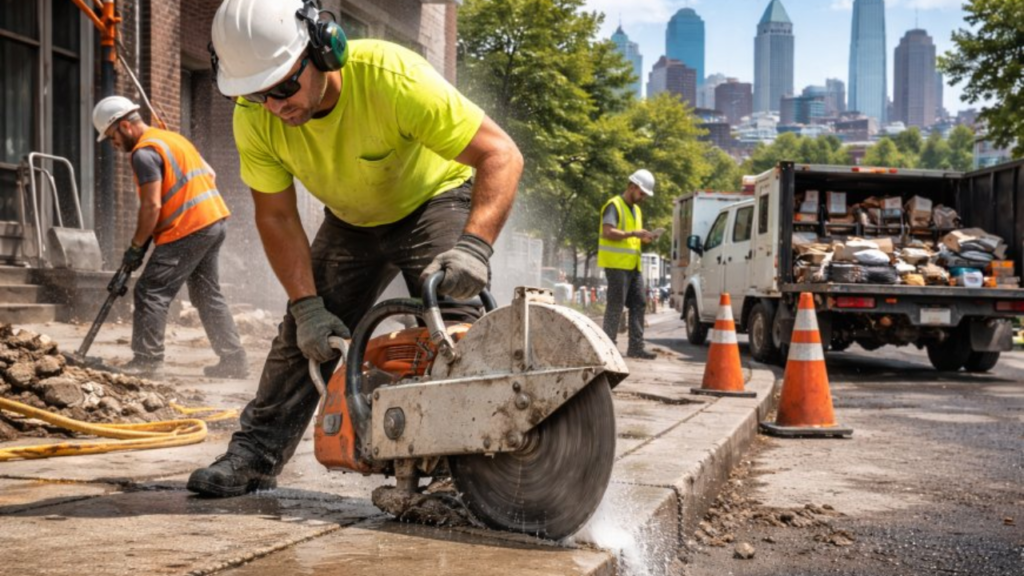
Concrete cutting has evolved dramatically from jackhammers and sledgehammers. Today’s technology employs diamond-blade saws, wire saws, and specialized equipment that cut through reinforced concrete with minimal vibration, reduced noise, and unprecedented accuracy. These tools create clean edges without the micro-fracturing that weakens surrounding concrete.
Diamond blade technology represents the industry standard for professional cutting. Industrial diamonds embedded in blade segments cut through concrete, rebar, and stone with remarkable efficiency. Different blade compositions suit various concrete densities, aggregate types, and cutting depths, requiring expertise to select appropriate equipment for each project.
Wall sawing handles vertical cuts through walls and other upright surfaces. Floor sawing addresses horizontal surfaces like slabs and pavement. Wire sawing tackles irregular shapes, thick sections, and underwater cuts. Core drilling creates precise circular openings for utilities, ventilation, and structural modifications. Professional services assess project requirements and deploy appropriate techniques for optimal results.
Common Applications in Philadelphia Properties
Philadelphia’s diverse building stock creates varied concrete cutting needs. Historic properties require window or door expansions while preserving architectural integrity. Commercial buildings need utility penetrations for upgraded HVAC, plumbing, or electrical systems. Residential renovations often involve removing partial walls, creating new openings, or modifying basement access.
Foundation repairs frequently necessitate concrete cutting. Water intrusion, settling, or structural modifications require selective concrete removal without compromising foundation stability. Attempting these modifications with demolition tools risks catastrophic structural damage, while precision cutting maintains integrity throughout the process.
Concrete removal for pool installation, utility trenching, or landscaping projects benefits from professional cutting services. Clean cuts reduce material waste, simplify debris removal, and expedite project timelines. Rather than breaking concrete into irregular chunks requiring extensive hauling, precision cuts create manageable sections sized for efficient disposal.
Why DIY Concrete Cutting Fails
Homeowners occasionally attempt concrete cutting with rental equipment, usually discovering too late why professionals exist. Rental saws lack the power, blade quality, and specialized features that professional equipment provides. More critically, improper technique causes blade binding, equipment damage, and serious safety hazards.
Concrete dust represents a severe health risk. Silica particles released during cutting cause permanent lung damage with repeated exposure. OSHA regulations require specific dust control measures that rental equipment typically doesn’t include. Professional services employ wet cutting techniques and industrial vacuums that capture harmful dust before it becomes airborne.
Hitting embedded rebar, post-tension cables, or utilities during cutting can cause equipment failure, structural compromise, or dangerous situations. Professional contractors use ground-penetrating radar and other detection methods to identify hidden obstacles before cutting begins. This preparation prevents costly mistakes and dangerous accidents that plague amateur attempts.
The Structural Engineering Perspective
Every concrete cut affects structural load distribution. Removing sections from load-bearing walls without proper analysis and reinforcement can trigger progressive collapse. Even non-structural modifications may create stress concentrations that compromise long-term building performance.
Professional concrete cutting philadelphia services work with structural engineers when projects involve load-bearing elements. They understand which cuts require temporary shoring, permanent reinforcement, or structural modifications to maintain building safety. This expertise proves especially critical in Philadelphia’s older buildings where original engineering documentation may be unavailable.
Building codes govern concrete modifications, requiring permits and inspections for many projects. Professional contractors navigate these requirements, securing necessary approvals and ensuring work meets current standards. This compliance protects property owners from liability issues and ensures modifications don’t affect insurance coverage or property values.
Minimizing Disruption During Occupied Spaces
Many concrete cutting projects occur in occupied buildings where tenants, customers, or operations continue during construction. Dust, noise, and vibration from traditional demolition methods make this scenario untenable. Modern cutting technology dramatically reduces these disruptions, allowing work in sensitive environments.
Wet cutting methods eliminate airborne dust while significantly reducing noise levels compared to jackhammering. Vibration-dampening equipment protects adjacent structures and sensitive equipment. Strategic scheduling during off-hours further minimizes impact on building occupants. Professional services coordinate these considerations, planning work sequences that balance efficiency with disruption minimization.
For commercial properties, minimizing downtime directly impacts revenue. Professional concrete cutting completes in hours what demolition methods require days to accomplish. This efficiency reduces lost business days, tenant complaints, and project costs associated with extended timelines.
Environmental and Waste Management Considerations
Concrete cutting generates substantial waste requiring proper disposal. Philadelphia regulations govern construction debris handling, with penalties for improper disposal. Professional services include debris removal and disposal as part of comprehensive project management.
Precision cutting reduces total waste volume compared to demolition methods. Clean cuts create compact sections rather than fragmented rubble, decreasing hauling trips and disposal costs. Many concrete cutting services partner with recycling facilities where concrete gets crushed and repurposed as aggregate for new construction or road base material.
Water used in wet cutting requires management too. Slurry containing concrete particles and cutting residue needs proper collection and disposal to prevent drain clogs and environmental contamination. Professional operations include water recovery systems and slurry disposal processes that comply with environmental regulations.
Selecting Qualified Concrete Cutting Contractors
Not all concrete cutting services offer equivalent expertise. Look for contractors with extensive experience in projects similar to yours. Request references from past clients and verify licensing, insurance, and worker’s compensation coverage. Inadequate insurance leaves property owners liable for accidents or damage during cutting operations.
Equipment quality matters significantly. Established contractors invest in professional-grade saws, dust control systems, and safety equipment that rental-grade tools can’t match. Ask about equipment maintenance schedules and blade selection processes—these details reveal contractor professionalism and commitment to quality results.
Comprehensive services should include site evaluation, cutting plan development, necessary permits, actual cutting work, debris removal, and site cleanup. Transparent pricing with detailed estimates prevents surprise charges and indicates professional business practices. The lowest bid often reflects inexperience or inadequate equipment that compromises results.
Planning Your Concrete Cutting Project
Successful concrete cutting begins with clear project definition. Determine exactly what needs cutting, why, and what the final result should accomplish. This clarity helps contractors develop appropriate cutting strategies and identify potential complications before work begins.
Timing considerations affect project planning. Some cuts require building vacancies or utility shutdowns. Others need specific weather conditions or seasonal timing. Professional contractors help schedule work optimally, coordinating with other trades and minimizing conflicts.
Budget realistic expectations for costs. Professional concrete cutting typically ranges from $4-12 per linear foot depending on depth, reinforcement, and access difficulty. Complex projects involving structural modifications, specialized equipment, or challenging access cost more. However, this investment prevents the far greater expenses associated with structural damage from improper cutting methods.
The Long-Term Value Proposition
Professional concrete cutting preserves structural integrity while achieving necessary modifications. This preservation protects your property investment, maintains building safety, and prevents costly remediation of damage from improper cutting techniques. The precision and expertise professional services provide justify costs through superior results and eliminated risks.
Quality cutting work becomes invisible over time—modifications blend seamlessly with existing structures, creating the impression that openings or changes were always present. This seamless integration maintains aesthetic appeal and property values while delivering required functionality.
Your Philadelphia property deserves modifications executed with skill, precision, and respect for structural integrity. Professional concrete cutting delivers exactly that.
Frequently Asked Questions
How deep can concrete cutting equipment cut? Professional wall saws typically cut up to 24-30 inches deep, while specialized equipment handles greater depths. Wire saws can cut through concrete of virtually any thickness. Contractors select equipment based on specific project requirements.
Will concrete cutting damage my building’s structure? When performed by qualified professionals using proper techniques, concrete cutting preserves structural integrity. Contractors identify load-bearing elements, use appropriate reinforcement, and employ cutting methods that minimize stress on surrounding concrete.
How long does a typical concrete cutting project take? Timeline varies by project scope. Simple door or window openings may complete in a few hours, while extensive modifications require multiple days. Contractors provide realistic timelines during project planning.
Do I need permits for concrete cutting work? Many concrete modifications require building permits, especially those affecting structural elements or creating new openings. Professional contractors navigate permit requirements and ensure compliance with Philadelphia building codes.
What’s the difference between concrete cutting and demolition? Concrete cutting uses precision equipment to make controlled cuts with minimal vibration and clean edges. Demolition uses impact force to break concrete, creating vibration, noise, and irregular edges that may damage surrounding structures.